
For trips that cannot be taken sitting up
Stretcher transportation for riders who travel lying down
No ambulance needed, but a seat was never an option
Some riders cannot sit upright for a journey. Jomia Med Transport moves them on a secured stretcher, from the bed at one end to the bed at the other, with two people handling every lift and transfer.
02Why this ride matters
When a stretcher is the right call
Stretcher transportation covers scheduled, non-emergency trips for people who cannot safely sit in a vehicle seat or a wheelchair. Pressure injuries, spinal precautions, advanced frailty, late-stage illness or simple exhaustion after a long admission all make lying flat the only sensible way to travel.
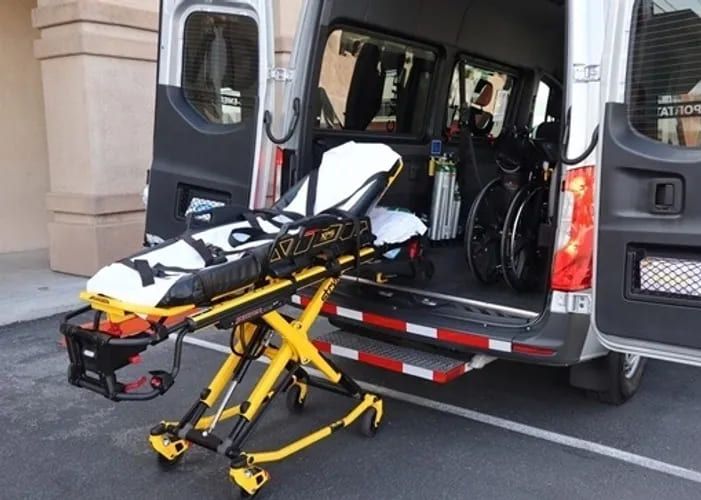
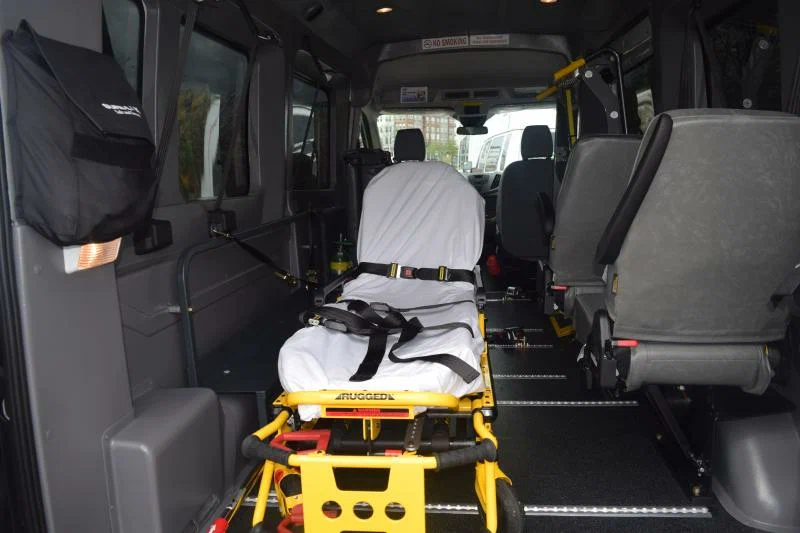
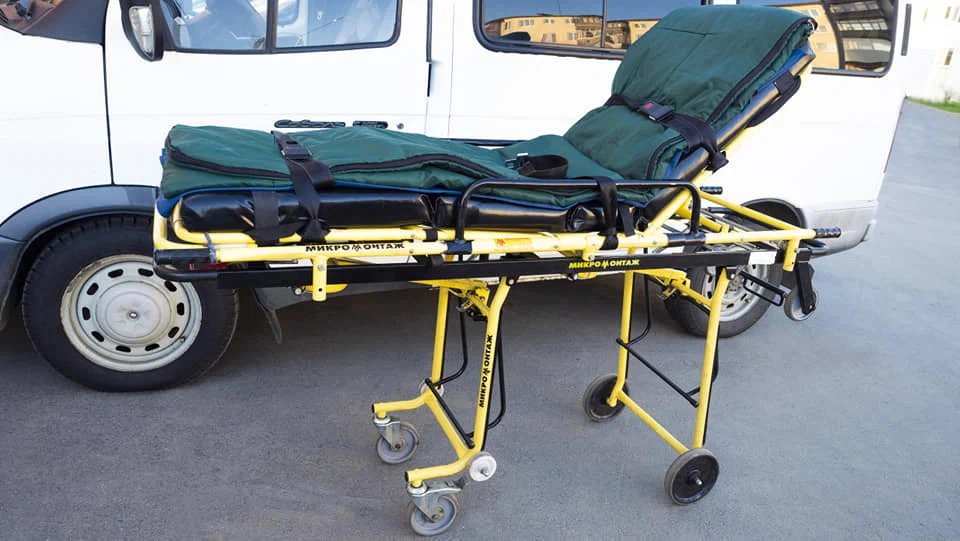
This is not an ambulance service. There is no siren, no emergency destination and no clinical treatment on board. What there is: a proper stretcher locked into a floor track, padding and blankets, safety straps across the chest, hips and legs, and a crew that plans the route around comfort rather than speed.
Every stretcher booking is arranged in advance so the right vehicle and the right number of hands are scheduled. We confirm the exact pickup room or address, the stairs or lifts involved and who will meet the rider at the other end.
03Who it is for
Who travels by stretcher
Riders on bed rest
People whose care plan keeps them flat, including those with pressure wounds or healing surgical sites.
Facility to facility moves
Transfers between a hospital, a rehabilitation centre, a nursing facility or home when the discharge is planned rather than urgent.
Hospice and palliative riders
Journeys home or to a hospice bed, handled quietly and without hurry, with family able to follow or ride along.
Riders who cannot sit for long
Passengers who manage a few minutes upright but not a forty-minute drive across Northern Virginia traffic.
04The Jomia experience
What travelling with Jomia actually feels like
Two people on every lift
Bed to stretcher and stretcher to bed transfers are never a one-person job, so they are never scheduled as one.
Properly secured, every time
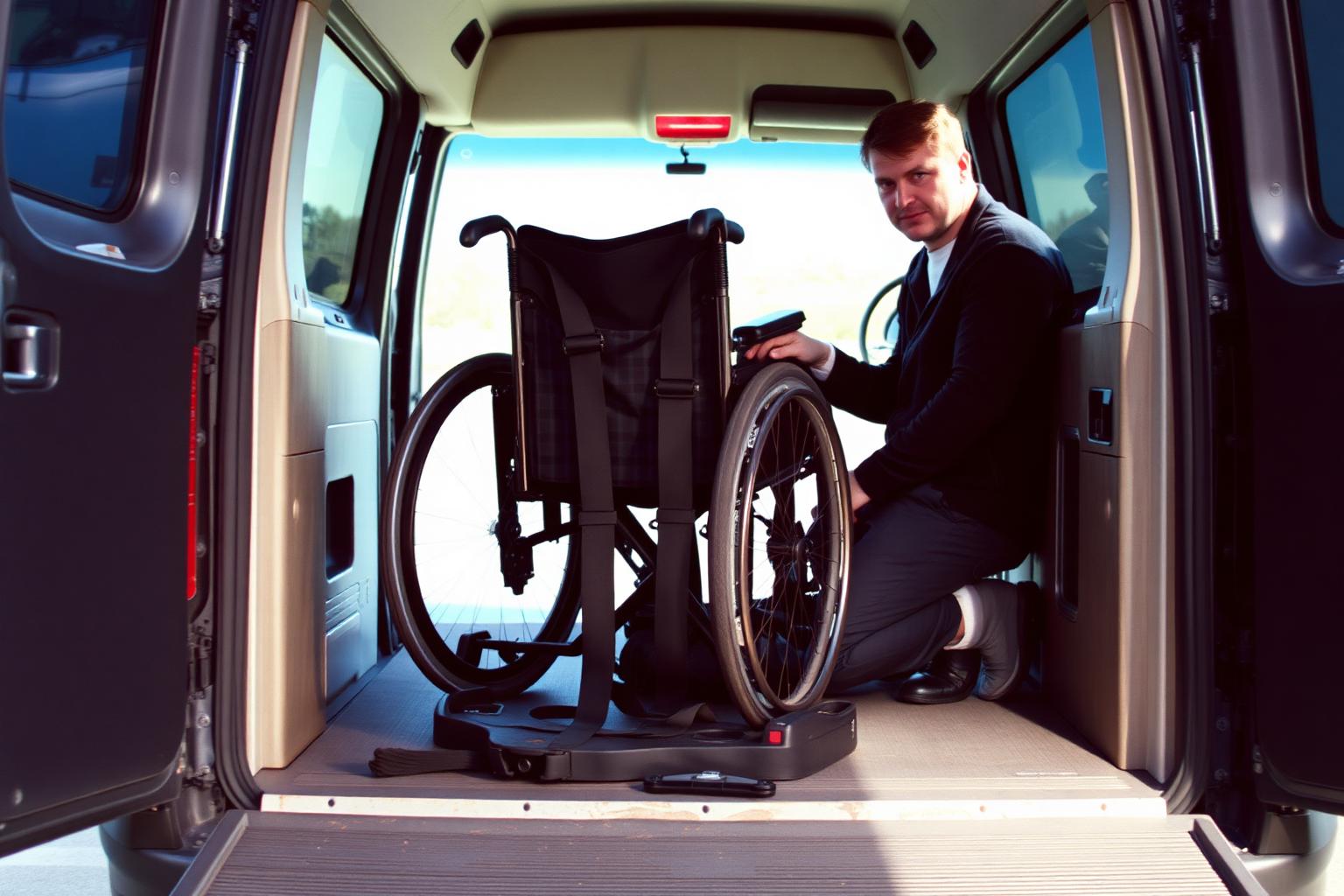
The stretcher locks into the vehicle floor and the rider is strapped and padded before the doors close.
Honest about scope
If a trip needs clinical monitoring or an ambulance crew, we say so at booking instead of taking the job anyway.
05How it works
Four steps between the phone call and the front door
- 1
01
Call with the details
Where the rider is now, where they are going, the floor, the lift and the doorway widths.
- 2
02
We confirm suitability
A short conversation about weight, oxygen, catheters and whether a stretcher is genuinely the right vehicle.
- 3
03
Scheduled crew and vehicle
A stretcher-equipped van and enough hands booked for the exact time slot.
- 4
04
Bed to bed
The rider is moved, secured, driven and settled at the destination before the crew leaves.
06The transfer, mapped
One continuous journey, handed over carefully at each end
The stretcher comes to the rider rather than the other way round. It is lowered beside the bed, the transfer is made with a slide sheet, and blankets go on before anything moves. Straps are checked out loud so nobody is surprised by them.
01
Bed to bed handling at both ends of the trip
02
Stretcher locked into the vehicle floor track
03
Chest, hip and leg straps with padding and blankets
04
Space for a portable oxygen cylinder brought by the rider
05
One family member able to ride along in a passenger seat
Section 07 · Door to door
Stretcher Transportation handled by people who wait, walk beside you and drive you home again
08What you get
Included with stretcher transportation
Dignity
Blankets on, curtains of privacy where possible, and no audience at the kerb.
Planned, not rushed
Booked slots with room in them, so the transfer is not done against a stopwatch.
One point of contact
The same number handles the outbound move, the return and any change of date.
Family included
Relatives are told what is happening at each stage instead of watching from a corridor.
09Related services
Rides that often go together
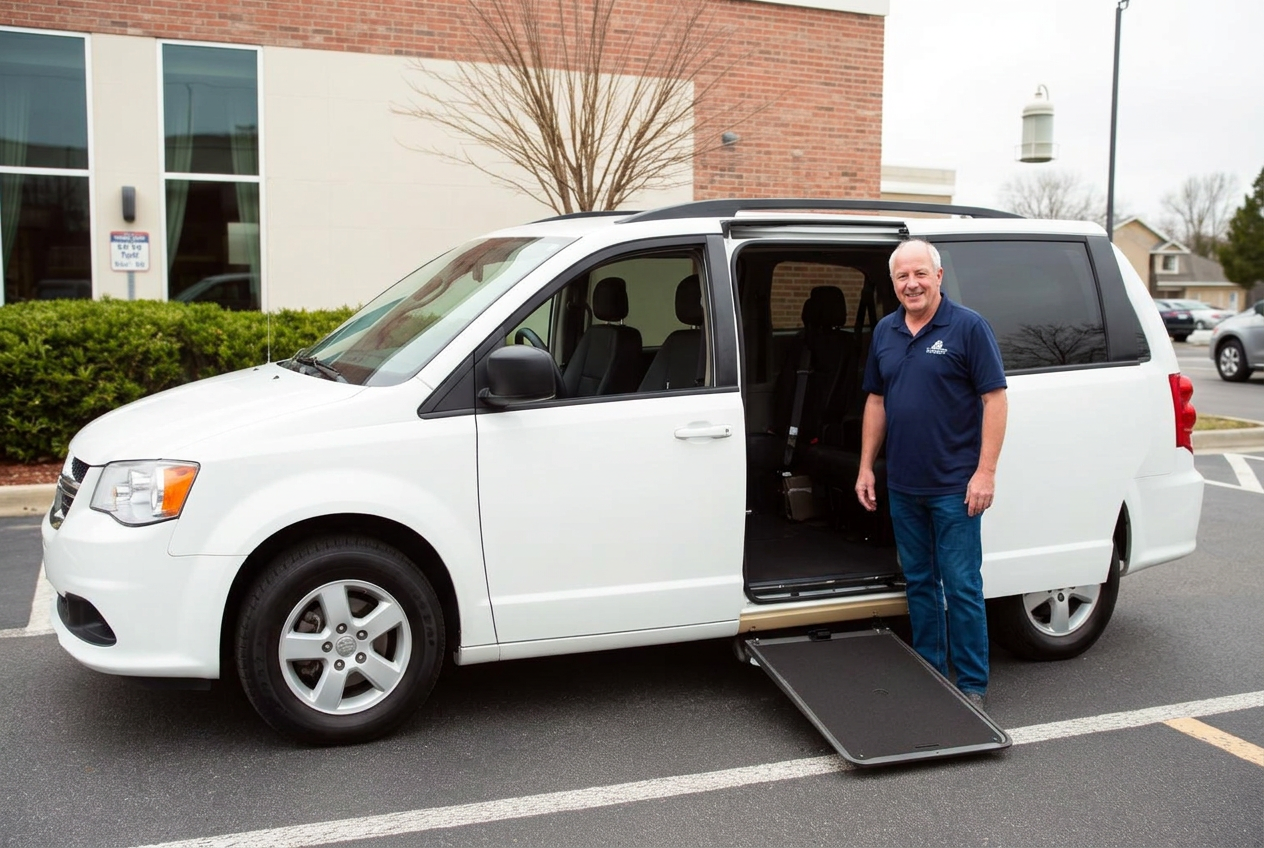
10Where we drive
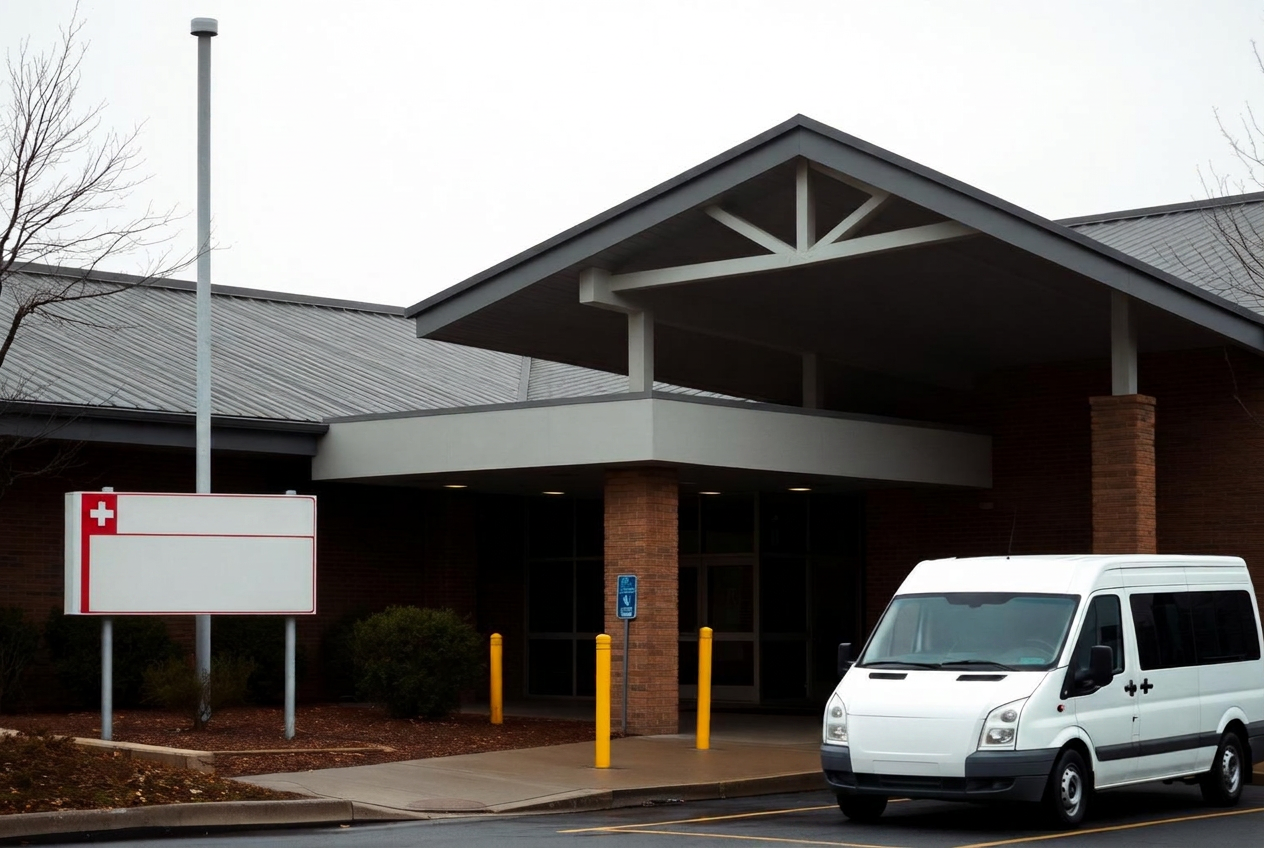
Stretcher Transportation across Virginia, from a base in Woodbridge
Jomia operates out of Woodbridge and drives daily through the Virginia medical corridors. If your pickup address or destination sits further out in Virginia, call and we will confirm availability honestly before you rely on it.
Questions, answered
Stretcher Transportation: questions we hear in Woodbridge
No. This is scheduled non-emergency transportation. There is no clinical treatment, monitoring or emergency response on board. If a trip needs any of that, call 911 or an ambulance provider instead.
Yes. Tell us the floor, the room number and the person to check in with. The crew brings the stretcher to the bedside and handles the transfer there.
As much as you can give. Stretcher bookings need a specific vehicle and extra hands, so a day or two ahead is comfortable. Call (571) 580-3193 for a same-week or next-day request and you will get a straight yes or no.
One relative can ride in a passenger seat in the same vehicle. If more people are coming, they follow in their own car and meet you at the destination.
Riders regularly travel with their own portable oxygen cylinder or a drainage bag. Mention it at booking so the crew knows how to position and secure everything before moving.
Not automatically, but they change the plan. Describe the stairs, the turns and the doorway widths when you call and we will tell you honestly whether the move can be done safely.
Yes. Book both legs together so the return is already scheduled, which matters most when the rider is tired at the end of an appointment.
Stretcher work runs from Woodbridge across Prince William County and the wider Northern Virginia corridor. Transportation availability may vary by pickup location. Contact Jomia Med Transport to confirm service availability for your specific location.
Ready when you are
Let's get your stretcher transportation covered
Tell us the details of your ride and we'll help you plan the transportation you need.